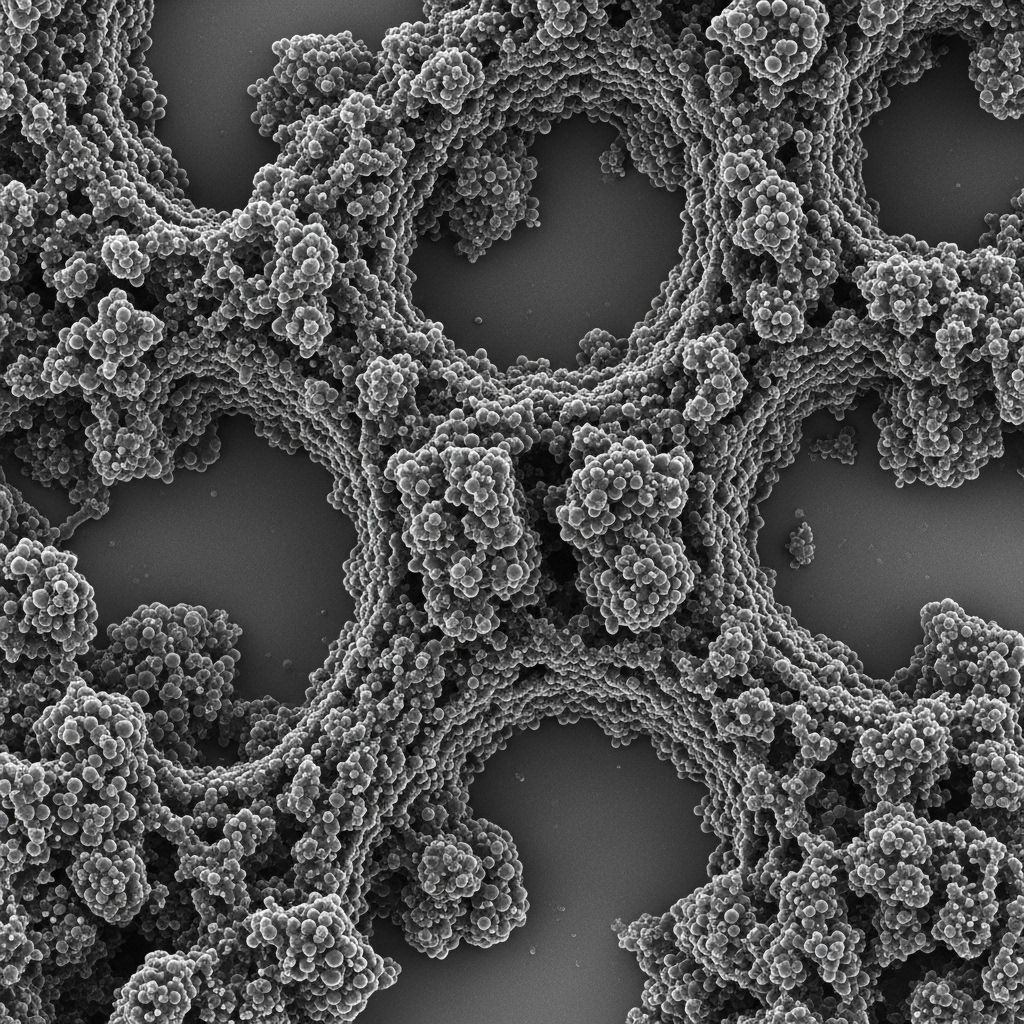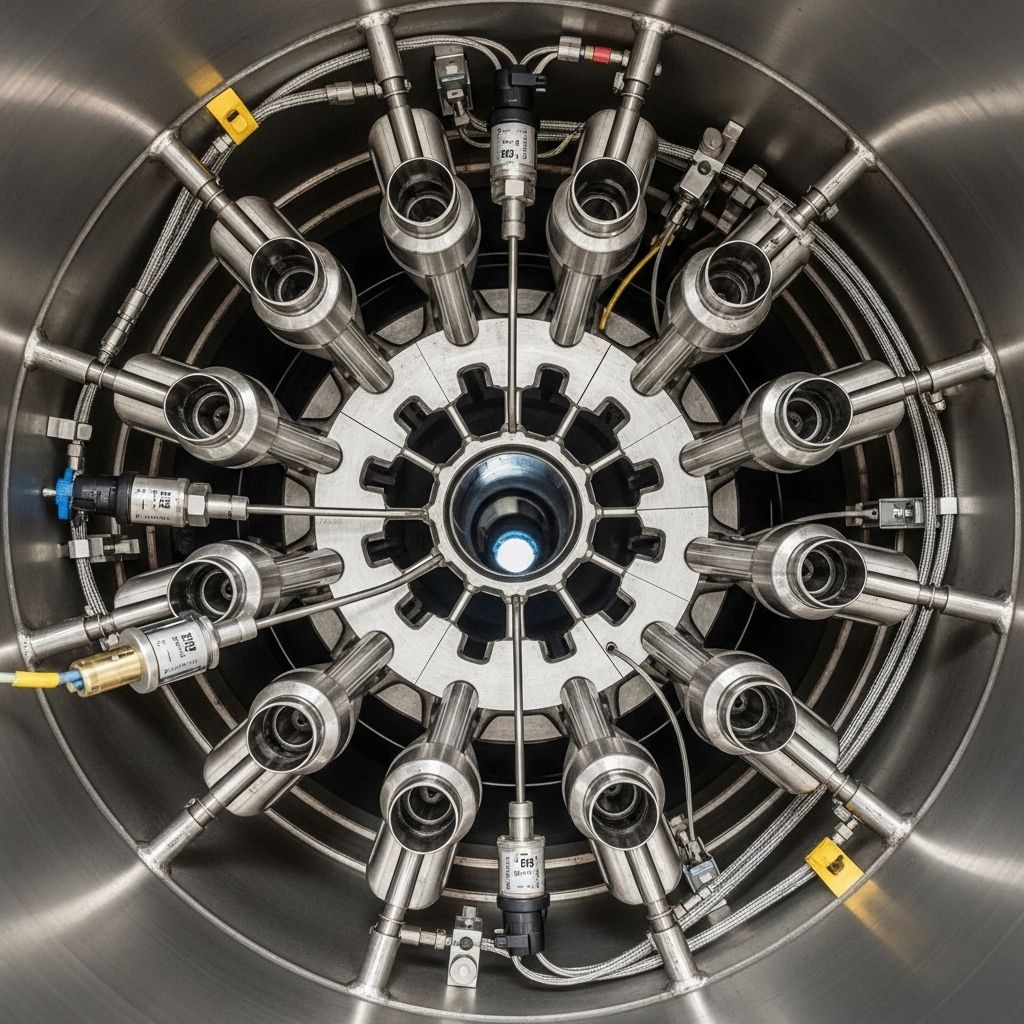
Warmth is older than history. The use of fire for heating — and the engineering of spaces to retain that warmth — is one of the defining threads of human civilisation. But the story of heating technology in Europe is not a simple narrative of linear progress. It is a series of advances and retreats, of sophisticated solutions lost and rediscovered, of engineering insight alternating with centuries of apparent stagnation. The physical chemistry of the carbon residues deposited in heating structures across two millennia provides a kind of chemical autobiography of that story.
The Roman Achievement: Hypocaust Heating
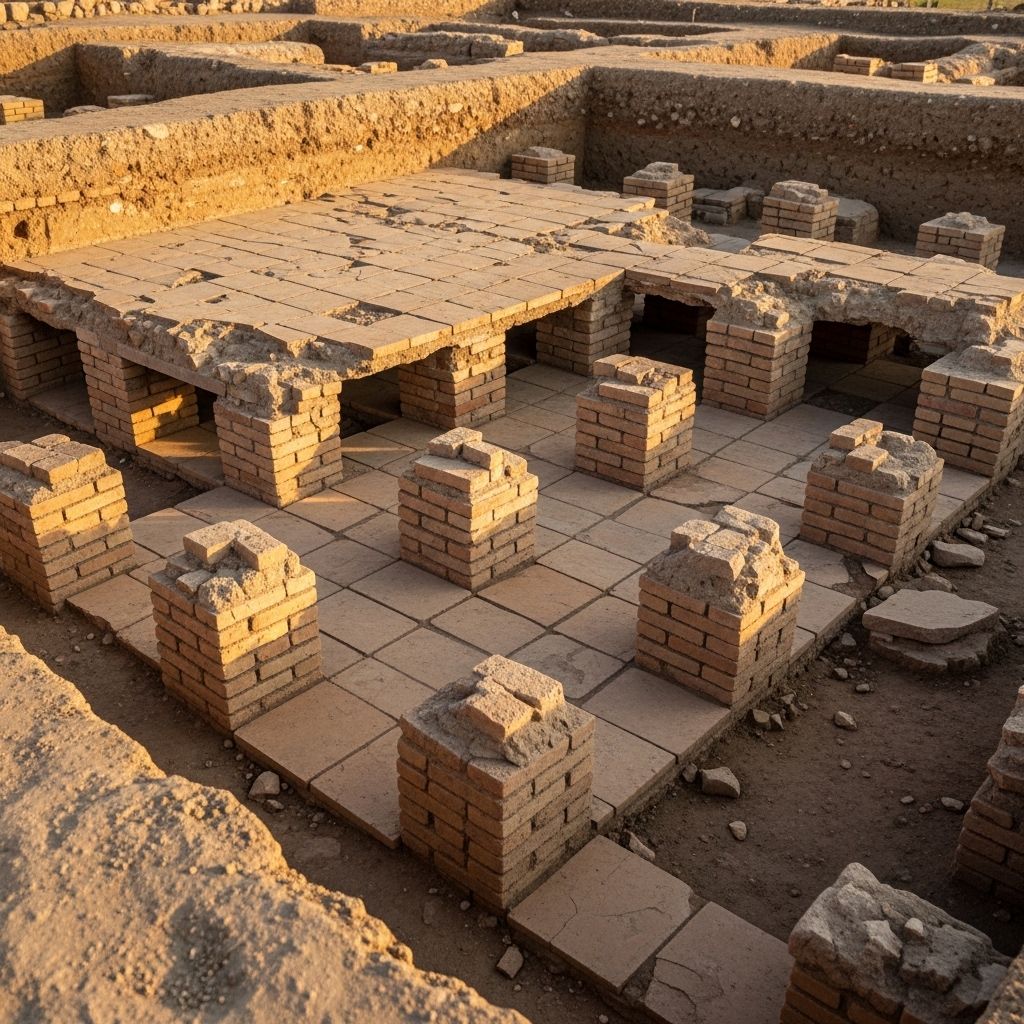
The Roman hypocaust (from the Greek ὑπόκαυστον, "burning underneath") represented the most sophisticated domestic heating technology available in the ancient world — and would not be substantially improved upon for more than 1,500 years. The basic principle was elegant: hot combustion gases from a furnace (praefurnium) located outside the building were directed beneath a raised floor supported on stacks of ceramic tile pillars (pilae), heating the floor above and the wall cavities (tubuli) around the room before exhausting through flues in the walls.
The system combined three heat transfer mechanisms in sequence: forced convection of the hot gases through the underfloor space; conduction through the floor construction; and radiation and natural convection from the heated floor and wall surfaces to the room interior. This is, in broad functional terms, identical to the modern underfloor radiant heating system, suggesting that the Romans had independently arrived at the thermodynamically optimal solution for even, comfortable, low-temperature-surface heating.
Hypocaust systems have been documented at Roman sites throughout the Netherlands — most notably at Coriovalum (present-day Heerlen), Ulpia Noviomagus (Nijmegen), and Forum Hadriani (Voorburg) — reflecting the Roman military and administrative presence in the Rhine frontier zone. The soot deposits preserved in these hypocaust cavities, analysed in archaeological chemistry studies, reveal the characteristic combustion products of wood, charcoal, and occasionally coal: a chemical archive of the fuels available in the frontier provinces of the empire.
"The Roman hypocaust is a salutary reminder that engineering history is not always progressive. A technology that disappeared with the Western Roman Empire in the 5th century would not be approached again in Europe until the 19th — a gap of 1,400 years."— I. Steenhoven, Warmte in de Gouden Eeuw, 2021
The Medieval Regression: The Open Hearth and Its Limitations
With the collapse of the Western Roman Empire in the 5th century CE, the technical knowledge and economic organisation required to build and maintain hypocaust systems dissolved. For the next several centuries, heating in northern European buildings regressed to a simpler and far less efficient technology: the open central hearth.
The early medieval hall, from Sutton Hoo to the Vikingborg, was heated by a fire burning in the centre of a large communal room, with smoke escaping through a hole in the roof (or simply permeating the thatch). The thermal inefficiency of this arrangement was enormous: the open fire radiated perhaps 15–20% of its combustion energy to the surrounding occupants; the remainder went up with the smoke, heated the upper air layers of the hall (which stratified above head height), and was lost to infiltration. Carbon deposits in the thatch and roof timbers of surviving medieval buildings record the millennia of this smoky compromise.
The introduction of the wall fireplace with a chimney — a technology that diffused across Europe from around the 11th century, probably via Norman architectural influence — represented a significant advance in habitability if not in thermal efficiency. The chimney allowed smoke to be removed from the room rather than permeating it, enabling the construction of lighter, larger windows (no longer needing to exclude smoke as well as cold), and the subdivision of buildings into separate heated rooms. But the open fireplace remained, thermodynamically, a poor heating device: most of the combustion heat continued to be lost to the flue.
The 16th–18th Centuries: The Age of the Enclosed Stove
The breakthrough that would transform domestic heating in northern Europe came not from a sudden theoretical insight but from the incremental refinement of the enclosed stove — a technology that appears to have developed in parallel in several locations across Central and Northern Europe from the 15th century onward.
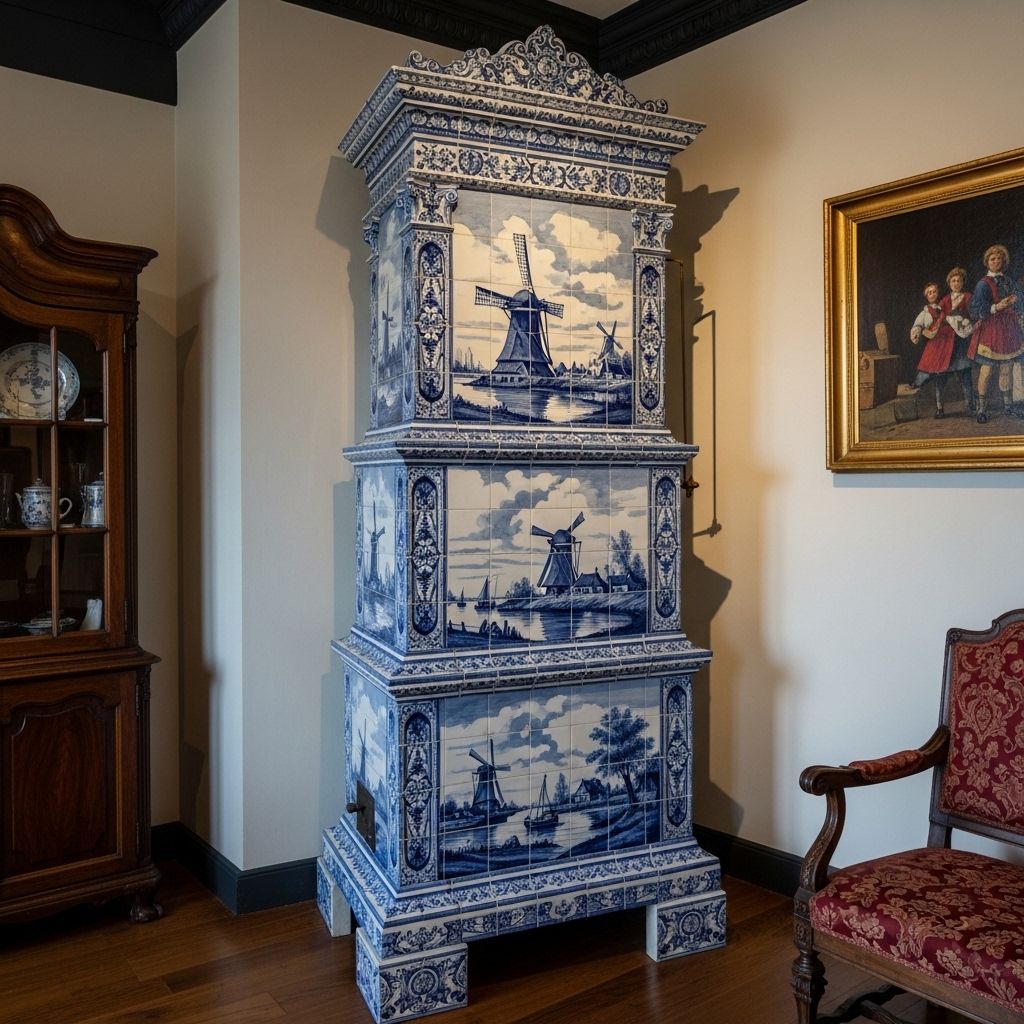
The fundamental principle — enclosing the combustion process in a firebox and extracting heat through the walls of the enclosure rather than through an open flame — increased heating efficiency from approximately 10–15% (open fireplace) to 50–70% (a well-designed tile or masonry stove) in a single conceptual leap. The ceramic tile stove as developed in the Netherlands during the Golden Age (discussed at length in our companion article on Dutch stove engineering) represented one of the most technically refined expressions of this principle — storing heat in high-thermal-mass ceramic cladding and releasing it slowly into the room over many hours.
Benjamin Franklin's famous Pennsylvania Fireplace (1741) — which introduced a heat exchanger between the firebox and the room air supply — was a parallel American development of the same enclosed-stove concept, aimed at reducing wood consumption on the colonial frontier. Franklin's design (and the cast-iron Franklin stoves derived from it in the 19th century) never achieved the thermal mass storage characteristic of the European tile stove, but it did demonstrate the value of heat exchanger surfaces in improving fireplace efficiency from a simpler, cheaper structure.
The Industrial Revolution and the Central Heating System
The development of reliable steam pressure engineering in the late 18th and early 19th centuries enabled a technology previously impossible: the central heating system, in which heat is generated at one point and distributed through a building (or between buildings) via a network of pipes carrying either steam or hot water. The first documented steam heating systems for buildings date to around 1795–1800, with installations at Boulton & Watt's Soho foundry in Birmingham and at the Bank of England in London among the earliest recorded.
Hot water central heating systems — which circulate water heated in a boiler through a network of radiators — were established technology in industrial and institutional buildings throughout Europe by the 1850s. The key enabling innovation was the development of affordable cast-iron radiators that could distribute heat evenly through a room without the fire risk of direct radiant heating, combined with reliable low-pressure boiler technology that could be maintained by non-specialist building staff.
In the Netherlands, central heating in urban buildings expanded rapidly in the second half of the 19th century, driven by the construction of large apartment blocks (huurkazernes) for the growing industrial working class and of purpose-built institutional buildings — hospitals, schools, prisons — in which individual room heating was impractical. The coalfields of Limburg and the imported English and German coal via the Dutch Rhine port system provided the fuel.
Natural Gas and the Dutch Thermal Transformation: 1959–2000
No event has shaped the modern Dutch heating landscape more profoundly than the 1959 discovery of the Groningen natural gas field at Slochteren in the province of Groningen. The field, developed by the Nederlandse Aardolie Maatschappij (NAM), a joint venture of Shell and ExxonMobil, ultimately proved to contain approximately 2,800 billion cubic metres of recoverable reserves — the largest natural gas field in Western Europe and one of the ten largest in the world.
The Dutch government's decision to distribute this gas benefit to domestic consumers through rapid, subsidised conversion of the entire national heating stock from coal and oil to natural gas produced a transformation of extraordinary speed and completeness. In 1963, the first households were connected to the new natural gas distribution network. By 1975, natural gas heating was standard in over 90% of Dutch homes. The coal stove, the coke boiler, and the fuel oil range had effectively ceased to exist as normal domestic technologies within a single generation.
The environmental and health consequences of this transition were substantial and largely positive: urban air quality improved dramatically as coal combustion soot and sulfur dioxide emissions from domestic heating essentially disappeared. The carbon deposits in Amsterdam's canal house chimneys are today primarily a historical artifact, their chemical composition reflecting the coal era that ended in the 1960s–70s rather than the natural gas era that followed.
The Heat Pump Revolution and Post-Combustion Heating
The thermodynamic principle of the heat pump — using mechanical work to transfer heat from a low-temperature source to a high-temperature sink, in apparent defiance of the ordinary direction of heat flow — was understood theoretically by William Thomson (Lord Kelvin) as early as 1852, derived directly from Carnot's cycle. The practical development of heat pump technology for building heating, however, was delayed for over a century by the cost and reliability issues of early refrigerant compressors.
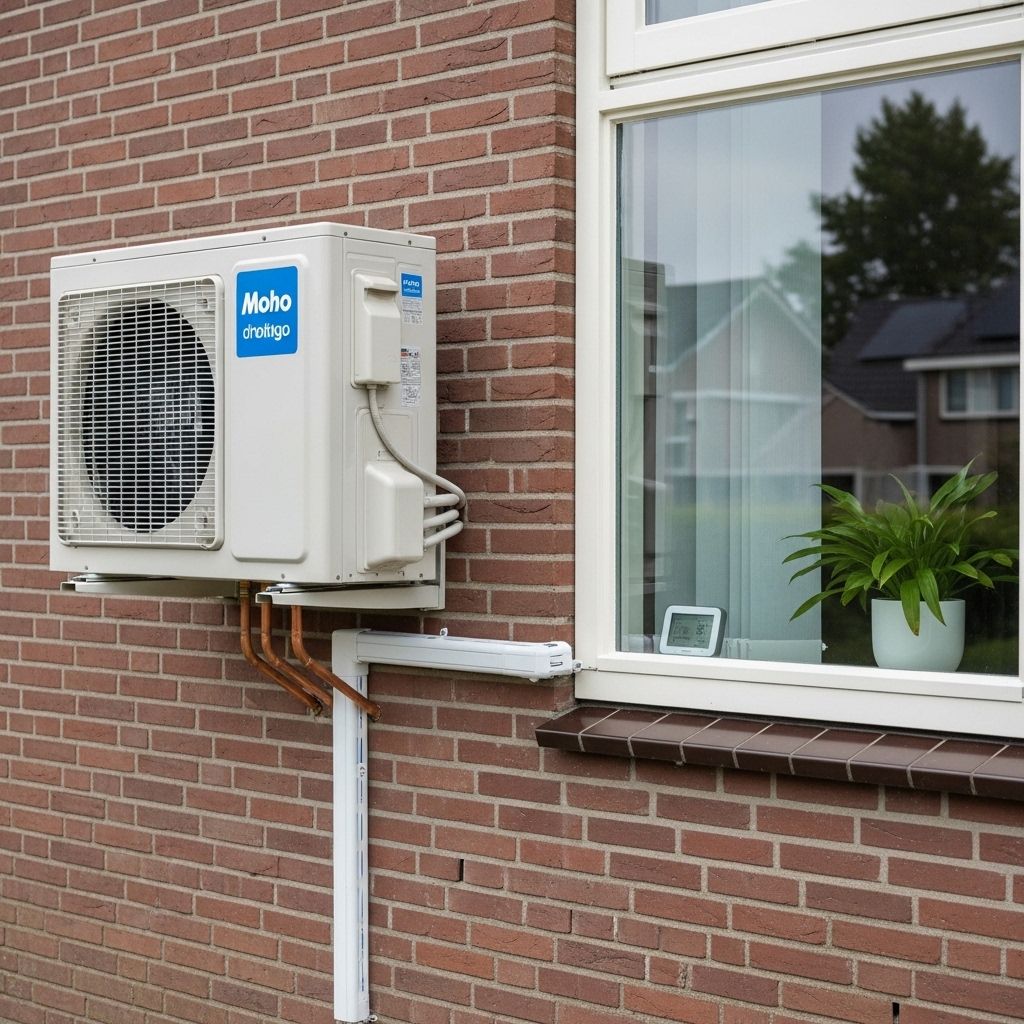
By the 1990s, improvements in compressor technology, refrigerant chemistry (the transition from CFCs to HFCs and then to natural refrigerants such as CO₂ and propane), and electronic control systems had made air-source heat pumps a commercially viable heating technology for well-insulated European buildings. In the Netherlands, heat pump installations grew from approximately 20,000 units in 2010 to over 400,000 by 2023, driven by gas price volatility following the Nord Stream disruptions, rising CO₂ prices under the EU Emissions Trading System, and declining heat pump hardware costs.
The coefficient of performance (COP) of a modern air-source heat pump — the ratio of heat delivered to electricity consumed — typically ranges from 2.5 to 4.5 under Netherlands climate conditions (average outdoor winter temperature 3–6°C). This means that for every unit of electrical energy consumed, 2.5 to 4.5 units of thermal energy are delivered to the building — an apparent efficiency of 250–450%. From a thermodynamic standpoint, the heat pump is not violating any conservation laws: it is upgrading the large quantity of low-grade heat stored in the outdoor air, a source that traditional combustion heating does not access at all.
The implication for carbon chemistry and combustion deposits is simple and final: a building heated entirely by a heat pump produces no combustion products. No soot, no PAHs, no CO₂ from the heating system itself. The flue that once blackened the interior of a canal house tile stove, or crusted with creosote in a Victorian coal boiler chimney, or accumulated the PAH-laden deposits of 20th-century oil burners, simply does not exist. The heating history written in carbon deposits — the chemical autobiography of two thousand years of European thermal engineering — is, at last, coming to its final chapter.
Key References
- Butti, K. & Perlin, J. (1980). A Golden Thread: 2500 Years of Solar Architecture and Technology. Van Nostrand Reinhold, New York.
- Landes, D.S. (1969). The Unbound Prometheus: Technological Change and Industrial Development in Western Europe from 1750 to the Present. Cambridge University Press.
- Suttor, W. (2014). Fernwärme: Rationelle Kraft-Wärme-Kopplung heute. Solarpraxis, Berlin.
- Aalbers, T. et al. (2023). Heat pump deployment in the Netherlands: Market development and barriers. Energy Policy, 182, 113–124.
- Willems, W.J.H. & van Enckevort, H.M.P. (eds.) (2009). Ulpia Noviomagus: Roman Nijmegen. Society for the Promotion of Roman Studies, London.